
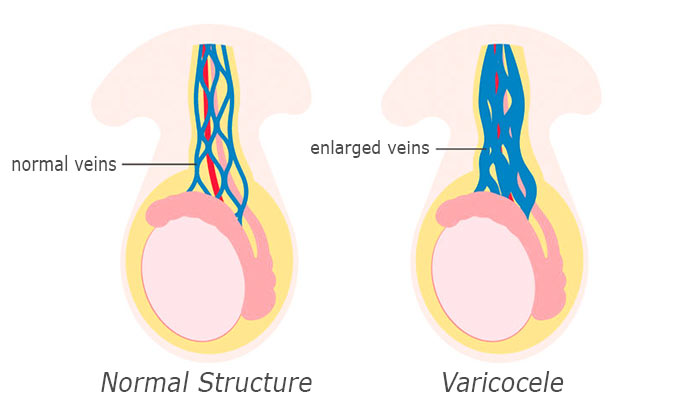
Overview
A varicocele is an abnormal enlargement of the veins that drain the testicle (the pampiniform plexus) — essentially varicose veins in the scrotum. They are the most common correctable cause of male infertility. The mechanism involves impaired venous drainage causing blood to pool, raising testicular temperature, increasing oxidative stress, and potentially refluxing adrenal hormones and metabolites into the testicular environment. Most common on the left side due to the anatomy of the left testicular vein.
How It Affects Fertility
- Elevated scrotal temperature from impaired venous heat exchange
- Increased oxidative stress and reactive oxygen species
- Reduced testosterone production from affected testis
- Reduced sperm count, motility, and morphology
- Progressive testicular atrophy if left untreated
Symptoms to Watch For
- Dull ache or feeling of heaviness in the scrotum — especially after standing or exercise
- Visible or palpable veins in the scrotum (often described as "bag of worms")
- Often completely asymptomatic — discovered during infertility investigation
- Testicular asymmetry, with the affected side visibly smaller
What You Can Do
- 1 Urological examination and grading (1–3) determines treatment urgency
- 2 Varicocelectomy or percutaneous embolisation are effective interventions with strong fertility evidence
- 3 Surgery improves natural conception rates by ~40% post-procedure
- 4 Address concurrently with other fertility factors for best combined outcomes
- 5 Do not assume it is the sole cause — comprehensive semen analysis still required regardless
This content is for educational purposes only and does not constitute medical advice. Always consult a qualified healthcare professional before making health decisions.